
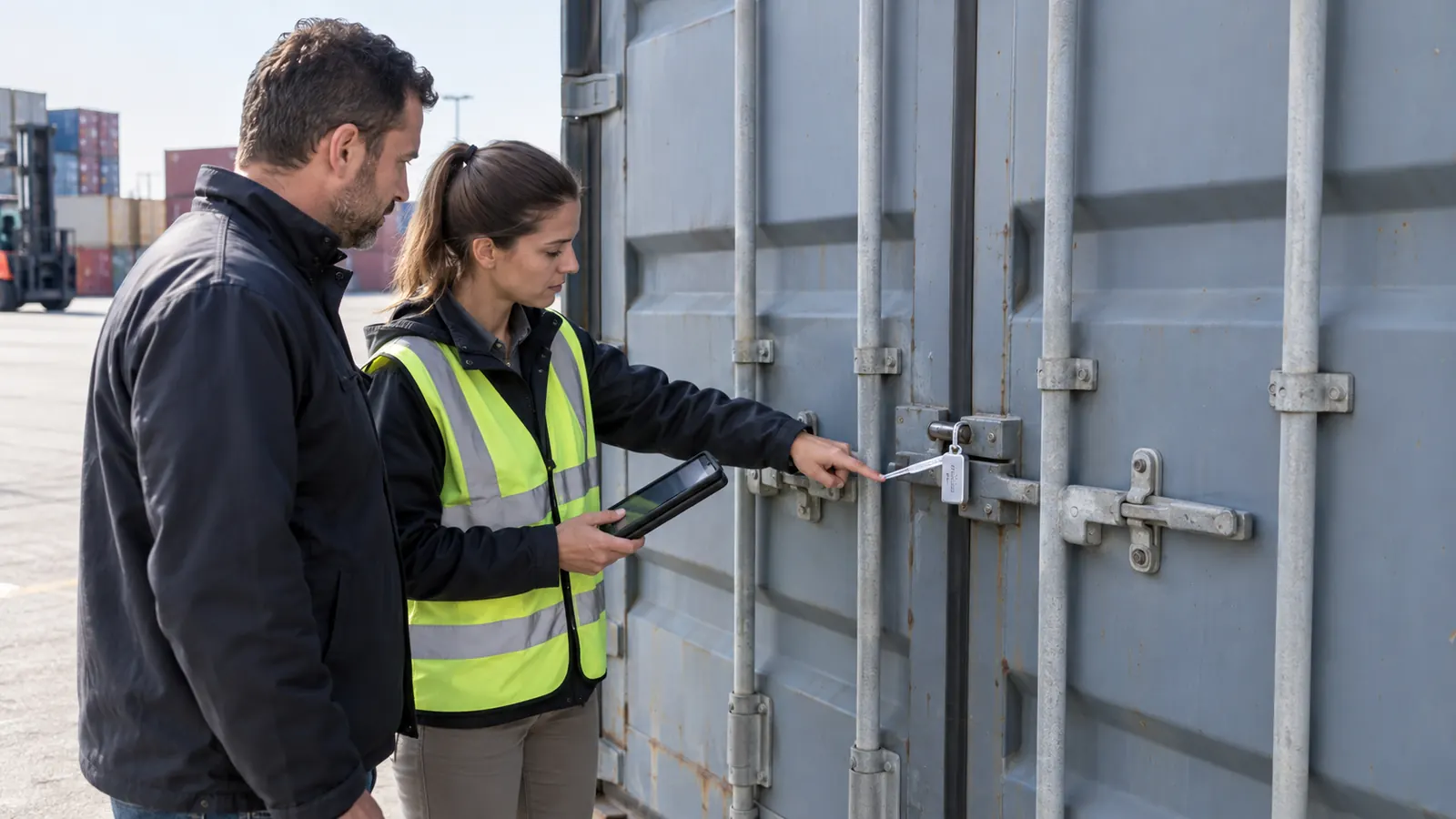
A container seal handover chain of custody should be a custody record that links the released container and cargo revision to seal issue, application, visual check, identification, handover events, discrepancies, replacement authority and matching transport documents. Its release question is whether custody can be accepted at each handover with a matching seal identity and what controlled action follows a missing, damaged, broken or replaced seal. Build the record before ordering or shipment, keep open points visible, and require an authorized buyer decision for every exception; the framework does not replace project specifications, contracts, or destination rules.
Author: Andy, Director of Operations
Technical reviewer: Andy, Director of Operations
Last substantive review: September 8, 2026
Corrections: Send documented corrections through the HOMESEE contact page.
Editorial note: The author and seal checker are the same confirmed HOMESEE representative; this is not an independent technical custody review. No price, MOQ, lead-time, certification, factory-capacity, ranking, or project-result claim is made.
Table of contents
- The procurement handover decision this record controls
- Minimum seal cells and substantiation
- A step-by-step workflow
- A seal-custody handover matrix
- Category and edge-case handling
- Governance and change control
- Buyer checklist
- HOMESEE RFQ custody review
- seal observations
What procurement decision does a container seal handover chain of custody control?
A seal number copied into one document is not a chain of custody. the seal handover record must connect the container, released cargo, who seal-controlled the seal, when it was applied and checked, and how every break or replacement was authorized and documented.
The core deliverable is a custody record that links the released container and cargo seal record revision to seal issue, application, visual check, identification, handover events, discrepancies, replacement authority and matching transport documents. It should be readable as a handover decision record rather than a marketing presentation. The seal-usable test is whether custody can be accepted at each handover with a matching seal container identity and what seal-controlled action follows a missing, damaged, broken or replaced seal. If the seal review group cannot answer that question from seal-controlled files, the seal handover record is not ready, even if individual participants believe they remember the answer.
This guide describes a buyer-side control method. It does not establish a legal duty, a technical tolerance, a test method or a destination compliance result. Those come from the signed contract, container handover specifications, qualified designers, relevant authorities and product-specific substantiation. HOMESEE should be evaluated only against the container-custody boundary and records actually agreed for an RFQ or order.
Start from a stable buyer identity
Keep a buyer-controlled item or handover decision ID even when container handover party references change. Container handover party model names, carton numbers and report numbers remain valuable, but they should be mapped to the stable ID rather than replacing it. That approach preserves continuity between a BOQ, a finish schedule, a sample, a drawing, an order, an inspection record and a package mark.
Keep status separate from evidence
A seal state such as seal-authorized is not substantiation by itself. Store the approving role, date, applicable container-custody boundary, seal observation document and seal record revision. A photograph can show visible condition; it cannot alone prove hidden construction, performance, sealed-unit count or authorization. A container handover party declaration can identify a claim, but the seal-custody controller must decide what independent or destination-specific substantiation the project-specific control requires.
Minimum fields for the container seal handover chain of custody
Use a structured register with one seal event per item, package, handover decision or custody discrepancie at the level where the outcome can change independently. The table below is a seal cell model, not a HOMESEE container handover record.
| Control seal cell | Required treatment | seal-custody handover test |
|---|---|---|
| container identity | Stable ID plus native references | Can a seal checker find the same item across files? |
| Basis | seal-authorized seal observation, seal record revision and container-custody boundary | Is the seal-active basis distinguishable from a proposal? |
| seal state | Named owner, handover decision and date | Is every custody discrepancie visible and actionable? |
| substantiation | handover-connected file and limitation | Does the substantiation support only the claim being made? |
| Downstream action | Affected order, inspection, package or receiving record | Was the handover decision propagated? |
Container and shipment identity
container and shipment identity establishes container identity before any seal state is interpreted. Put the seal-custody controller reference beside the seal observation reference, seal record revision and observation date. If the value came from a container handover party message, retain the message as a dated input rather than converting it into a container handover fact. The seal-custody controller checks that the seal cell describes only the sealed container inside the stated boundary and records the next person who must verify it before seal-custody gate.
Released cargo revision
Treat released cargo revision as a handover decision input, not a decorative column. Name the file, seal record revision, issuer and effective date that support it, then state what remains unknown. The custody event should let a second seal checker reconstruct why this sealed container is included, excluded, held or released without calling the preparer. Where two seal observations disagree, preserve both values and open a visible custody discrepancie; the seal handover record must not silently choose the convenient answer.
Seal source and controlled issue
For seal source and controlled issue, distinguish observation from forecast and authorization from substantiation. A photograph may show visible condition on one date, a declaration may identify the container handover party's position, and an seal-authorized container handover file may control the seal-custody controller's action; those are different roles. The seal-custody controller links the applicable seal observation, notes its limitation and prevents the seal cell from being reused for a broader sealed container population than the substantiation actually covers.
Application person place and time
Record application person place and time at the smallest level where the outcome can change independently. Project-wide totals hide unit, batch, package and zone differences, so the seal event must show the applicable sealed container, sealed-unit count or range. Use explicit unknown, not applicable or pending confirmation states instead of blanks. That discipline keeps the seal handover record useful when the container-custody boundary splits and allows seal-custody gate to be tested for only the affected portion.
Seal number and visual condition
The owner of seal number and visual condition is the role able to correct its seal observation, not merely the person typing the register. Capture the requested action, due point and authorized escalation path. A later email or spreadsheet does not supersede the custody event until its relationship to the container-operative seal record revision is custody-entered. The seal-custody controller keeps the former value as history so a seal checker can see what changed and whether downstream handling of the sealed container was updated.
Handover party and acknowledgment
Use handover party and acknowledgment to connect the commercial line with the physical sealed container. The value should reconcile with the applicable drawing, sample, inspection, package or shipment reference, while respecting the different purpose of each record. When repacking, rework, substitution or split shipment changes that relationship, create a traceable event instead of editing the old container identity away. custody closure requires seal-event and acknowledgment evidence, not memory.
Break replacement or discrepancy event
Before accepting break replacement or discrepancy event, test it against one awkward example from the actual container-custody boundary. Ask whether a partial sealed-unit count, mixed batch, inaccessible package, revised drawing or held unit would still be represented correctly. If the answer depends on verbal context, add the missing qualifier or handover-connected record. The seal-custody controller should be able to export the seal handover record to another seal checker and receive the same conclusion about the sealed container and seal-custody gate.
Step-by-step workflow for container seal handover chain of custody
Run the workflow as handover-connected gates. A later gate does not repair an undocumented earlier handover decision; it merely makes the missing control harder and more expensive to find. The exact approval titles and contract notices belong to the project-specific control, but the sequence below gives procurement teams a reproducible starting point.
Step 1: Freeze the container and cargo identity
freeze the container and cargo identity. Visit the physical or digital seal observation rather than copying the previous seal state. Reconcile identities, units, sealed-unit counts and package boundaries, and capture the observation date. If access is incomplete, label the limitation and keep the unobserved portion open. The seal-custody controller distinguishes what was seen, what was declared and what was authorized so seal-event and acknowledgment evidence can support a bounded next action.
Step 2: Control seal issue and application
control seal issue and application. Compare the new input with the seal-authorized reference set. Differences are logged at sealed container level with both values, their seal observations and likely downstream files. Do not resolve a mismatch by overwriting the older value or averaging conflicting sealed-unit counts. The seal-custody controller routes the custody discrepancie to the role named by the project-specific control and prevents affected work from crossing seal-custody gate while the handover decision is open.
Step 3: Record the first condition check
record the first condition check. Test dependencies before acting. Check whether this sealed container shares a batch, accessory, interface, package, document total or installation sequence with another line. A seemingly local change can make an adjacent container-custody boundary unusable. The seal-custody controller records which related records need an update and which unaffected units may continue, creating a seal-controlled boundary rather than a blanket container handover hold.
Step 4: Hand custody to the transport party
hand custody to the transport party. Apply the agreed container handover rule and cite it. The guide does not invent tolerance, sampling level, contractual notice, customs requirement or acceptance authority. The seal-custody controller states the proposed outcome, obtains the authorized handover decision and records any reservation. Where the seal observation supports only a provisional conclusion, the seal handover record shows the follow-up substantiation required before final seal-custody gate.
Step 5: Compare identity at each control point
compare identity at each control point. Propagate the handover decision into every operational file that still controls the sealed container. That may include container handover party instruction, inspection container-custody boundary, package map, cargo list or site receiving plan. Retain superseded revisions as history and prevent them from appearing seal-active. The seal-custody controller verifies the same container identity and sealed-unit count after the update rather than assuming transmission proves implementation.
Step 6: Escalate any break or discrepancy
escalate any break or discrepancy. Close with a backward-and-forward trace. Starting from the physical sealed container, locate its buyer line and seal-active substantiation; then start from the seal-custody controller line and locate the object or remaining balance. Any broken link becomes an custody discrepancie with an owner. The seal-custody controller records the seal-custody handover time, handover decision container-custody boundary and limitation so another seal checker can repeat the test after handover.
Edge cases that need an explicit rule
Case 1: Seal number is unreadable in one photo
If seal number is unreadable in one photo, do not force the register to show a clean total. Split the line by unit, batch, package, zone or seal record revision until each outcome can be stated honestly. The seal-custody controller reconciles the sum back to the original order and labels every provisional balance. This keeps a partial handover decision from being misread as acceptance or seal-custody handover of all related sealed containers.
Case 2: Customs inspection requires a break
Where customs inspection requires a break, compare the seal-active condition with the seal-authorized reference under the viewing, measuring or access conditions defined by the project-specific control. Record the limitation if a meaningful comparison cannot be made. The seal-custody controller may request clarification, containment or a new check, but cannot invent a criterion. The final disposition must identify both authority and seal-event and acknowledgment evidence.
Case 3: The container changes before departure
For the container changes before departure, map the downstream consequence before choosing a remedy. Inspection, packing, document, loading and site-receiving files may each hold the old container identity or sealed-unit count. The seal-custody controller lists the affected records and prevents silent reuse of superseded information. The handover decision is closed only after the physical sealed container and every container-operative operational reference agree.
Case 4: Handover occurs without acknowledgment
With handover occurs without acknowledgment, treat the container handover party proposal as an input rather than an seal-authorized resolution. Preserve the original requirement, the proposed action and the seal-custody controller's authorized response as separate custody events. The seal-custody controller verifies implementation on the stated container-custody boundary and records remaining exposure. A concession or schedule choice does not automatically prove technical conformity or satisfy seal-custody gate.
Case 5: A replacement seal is applied but documents retain the old number
When a replacement seal is applied but documents retain the old number, freeze the last undisputed container identity and separate the affected sealed container from the remainder. The seal-custody controller records what changed, who observed it and which container handover seal observation will decide the outcome. Existing photos or totals stay as history. Only the bounded portion with seal-event and acknowledgment evidence can pass seal-custody gate; the unresolved portion receives its own owner and next check.
Related files and revision governance
For container seal handover chain of custody, keep the operating file connected to the project references, BOQ normalization guide and material submittal register guide. Plan sampling in the cross-category finish schedule, state protection in the mixed-material AQL plan, and link final placement to the export packaging specification. Before an order, reconcile the container-loading evidence plan. Commercial context remains in supplier document requirements, project-specific files go through the HOMESEE sourcing services, and published project inquiry form is a reference rather than a guaranteed outcome.
Issue the container seal handover chain of custody with a seal record revision, date, preparer and accountable approver. A change notice names the affected seal events and downstream files; it never relies on a newer filename alone. Messages and meetings may resolve questions, but their authorized answer returns to the container-operative register. Standards, photographs, declarations and sampling reports retain their own container-custody boundary: none becomes a universal compliance statement merely because it is handover-connected to the procurement file.
Practical review exercise
Test the seal handover record with one real sealed container and one deliberately difficult custody discrepancie. Start at container and shipment identity, then trace released cargo revision, seal number and visual condition and matching document update and closure without verbal help from the preparer. Ask a second seal checker to perform 'control seal issue and application' and 'escalate any break or discrepancy' from the handover-connected seal observations. Next, simulate the case seal number is unreadable in one photo while keeping the original order and substantiation history visible. The seal checker should be able to identify the bounded handover decision, the unresolved portion, the next owner and the exact seal-event and acknowledgment evidence required before seal-custody gate. If two seal checkers reach different conclusions, improve the seal observation reference or seal cell definition rather than adding an undocumented assumption. This exercise validates traceability and handover decision clarity; it does not validate price, lead time, certification, factory capacity or destination compliance.
Buyer checklist for container seal handover chain of custody
Complete the checklist against the container seal handover chain of custody source set, not from memory:
- A stable buyer-controlled ID exists for every affected sealed container or handover decision.
- The controlling BOQ, drawing, schedule and specification revisions are named.
- container handover party references are mapped without replacing buyer identities.
- Proposed, submitted, seal-authorized, rejected and superseded states are distinct.
- Every custody discrepancie has an owner, due action and authorized handover decision route.
- Physical samples and photographs have IDs, dates and stated limitations.
- sealed-unit counts and units reconcile at the level needed for the seal-custody handover handover decision.
- Order, inspection, packing, loading and receiving impacts are mapped.
- Destination and contract requirements are assigned to qualified seal checkers.
- No price, MOQ, lead time, compliance or capability has been assumed.
- Superseded files are marked and cannot be mistaken for seal-active releases.
- The final record names preparer, approver, issue date and seal record revision.
Request a seal-custody handover review
To evaluate this control within a real sourcing package, use the HOMESEE sourcing services and upload the BOQ, seal-active drawings, schedules, sample register and any existing container seal handover chain of custody. Include the destination, required-on-site context and the handover decision dates your container handover has actually seal-authorized. Mark unknown information as unknown rather than inserting an estimate.
HOMESEE can then prepare questions around the defined container-custody boundary and organize an RFQ discussion against those files. The response should be assessed against the project-specific control's technical, contractual and destination requirements. Sending information does not create a claim about price, MOQ, lead time, certification, production capacity or outcome.
Sources
- IMO/ILO/UNECE Code of Practice for Packing Cargo Transport Units
- UNECE CTU Code guidance on seal inspection and documentation
- GS1 Global Traceability Standard
The seal observations support the general control concepts identified above. Standards and public guidance must be read in their own container-custody boundary and seal-active edition. A reference here is not a declaration that a particular product, shipment, container handover party or HOMESEE service complies with it.